Sunday, August 31, 2014

Honda CL200 1974

Dan Mantyla bought a motorcycle 1974 Honda CL200 and was faced with what to do next: to modify or restore? He is well versed in the mechanics and design, so the choice was obvious. During the day, Dan is engaged in web design, and in the evening transforms into customizer.
Project details of Honda CL200 1974 Goal: building custom bikes that visually resembles the stock bike Frame: overcooked and slightly altered Fuel tank: overcooked, repainted Light: less than the original Steering wheel: understated And many more, new tires, exhaust, etc.
READ MORE - Honda CL200 1974

1949 Indian Scout

Company “Indian Motorcycles” recently released a new motorcycle Indian Scout, which is a modern interpretation of the iconic model of the American manufacturer. Novelty immediately attracted the attention of customizers, but some artists still prefer to work with the original model. For example, a custom Indian Scout 1949 customized by Tony Prust and his team “Analog Motorcycles”.
1949 Indian Scout Specifications: Frame: Track Master, work Frame Crafters Fuel tank, seat and fairing: aluminum, Analog + Pavletic Metal Shaping Copper cap and wings: Mike Ardito Engine: Engine built by Bill Bailey of ZyZX Vintage Motorcycles, a 12-volt system, the ignition Dyna III Carburetor: Amal 928 Exhaust: custom made by Analog with parts and stubby mufflers from Cone Engineering Oil tank: Customize Paint Kiel from Crown Autobody Controls: Magura Speedometer: Seattle Speedometer Sets: Tarrozi Forks and triples: Betor Kit: TZ750 Wheels and spokes: Buchanan Tank cover: Crime Scene Choppers Spotlight: Piaa LED Tires: Avon Roadrider
READ MORE - 1949 Indian Scout

Honda XR650L

Honda XR650L is one of the most reliable and dual purpose motorcycles. As Motorcycle Suzuki DR650 and Kawasaki KLR650, the custom Honda XR650L is easy to maintain, but it is hardly suitable for customizing a number of reasons, starting with the ride height and chassis geometry. The 2007 Honda XR650L is customized by Joe Tessitore from “Digital Directiv” workshop. Details of 2007 Custom Honda XR650L: Donor: Honda XR650L 2007 Goal: build a supermoto in vintage style Frame: a new sub-frame + short rear fender, removed extra brackets, made under the battery box Engine: polished cover Suspension: spring Progressive Suspension Ergonomics: planting understated by 40 mm Wheels: Aluminum wheels with steel spoke Buchannan Tires: Pirelli Scorpion Electrical system: new wiring harness, new ignition and wiring Paint: Tony’s Customs Padding: New Church Moto
READ MORE - Honda XR650L

Yamaha XT500

Motorcycle Yamaha XT500 was designed on the bases of legendary SR500. It is equipped with the same reliable 499-cc engine. At the time (mid 70′s) model XT500 in demand and in 1979-1980 Frenchman Cyril Neveu won the Paris-Dakar Rally with that bike. Here we present latest pictures of custom Yamaha XT500 that is remade by Scott Masters from “(H) Garage” in Louisville, Kentucky Project details of Yamaha XT500: Fuel tank: Yamaha CT175 Saddle: a custom upholstery + New Church Moto Exhaust: a custom system «Bluegrass Muffler» higher fastening Protection: homemade, aluminum Rear suspension: Progressive Canister: Rotopax And much more
READ MORE - Yamaha XT500

Yamaha R25

Yamaha has introduced the concept of 250 -cubic sports bike Yamaha R25, which is scheduled for production in 2014. The Japanese manufacturer has been working on a new sports bike which can compete with Honda CBR250R and Kawasaki Ninja 300, as well as help in winning Yamaha Asian motorcycle, particularly in India.
Yamaha R25 motorcycle is only pre-production prototype, so the production version may have some or even significant differences. However, it is already evident that the design of Yamaha R25 inspired by the motorcycles Yamaha M1, R1 and R6, although differences from the “adult” bikes a lot. For example, we can take at least a tubular frame. According to rumors, R25 engine develops about 45 hp, though it is not official information.Yamaha has introduced the concept of 250 -cubic sports bike Yamaha R25, which is scheduled for production in 2014. The Japanese manufacturer has been working on a new sports bike which can compete with Honda CBR250R and Kawasaki Ninja 300, as well as help in winning Yamaha Asian motorcycle, particularly in India.
Yamaha R25 motorcycle is only pre-production prototype, so the production version may have some or even significant differences. However, it is already evident that the design of Yamaha R25 inspired by the motorcycles Yamaha M1, R1 and R6, although differences from the “adult” bikes a lot. For example, we can take at least a tubular frame. According to rumors, R25 engine develops about 45 hp, though it is not official information.
READ MORE - Yamaha R25

Big Wheel

Honda’s all-new CRF125FB (Big Wheel) is going to be a great choice for a wide range of riders. Basically, it’s the same great machine as our new CRF125F, but with bigger wheels and a two-inch taller seat height. You’ll find it’s perfect for teens and smaller adults who just want to get out on the trails and have fun. Loaded with features, we’re especially proud of its reliability (nothing can match a Honda for that), so you get to concentrate on having a good time rather than fussing with a temperamental machine.
Rugged, simple and easy to maintain, it offers styling cues that match our CRF450R and CRF250R motocross bikes. Its electric starter makes it easy to get underway, while a four-speed transmission gives you all the control of a full-sized bike. Off-road riding should be fun. And for 2014, the new CRF125F (Big Wheel) offers as much fun as bikes twice its size. Be A Responsible Rider Parents need to consider their youngster’s age, size, ability and maturity before allowing them to ride. See owner’s manual for additional safety and supervisory information. Designed exclusively for off-road operator-only use. Always wear a helmet, eye protection and protective clothing whenever you ride. Never ride under the influence of drugs or alcohol. In 2013 the CRF110F replaced the immensely popular CRF70F within Honda's family of fun, entry-level off-road bikes. Now, two new larger-displacement 2014 CRF125F models enter the lineup, allowing consumers more choices in this market segment. The two CRF125F models offer unique wheel sizes that allow them to replace the CRF80F and CRF100F. With a seat height of 28.9 inches, the small-wheel CRF125F seat is the same height as the CRF80F it replaces, while the CRF125F Big Wheel features the same seat height-30.9 inches-as the CRF100F it replaces. This seat-height option allows riders to pick the CRF125F that fits best. Featuring an all-new electric-start 125cc single-cylinder OHC four-stroke engine tuned for loads of low-end grunt plus plenty of pull throughout the powerband, the CRF125Fs also feature a four-speed gearbox. Add a new rolling chassis with upgraded suspension components front and rear plus styling just like Honda's CRF® motocross bikes, and you have a great addition to Honda's off-road line of family machines with a bike for all riders-young to old, beginner to expert. One of the great things about Honda’s line of off-road trail bikes is they seem to have something for everyone, case in point the CRF125F (Big Wheel). Essentially the same as the standard CRF125F the "Big Wheel” version is fitted with 2” larger wheels at each end with a corresponding increase in seat height, ground clearance and wheelbase. Of course it has all the same great features as the regular CRF125F, only with a bit more room. Just getting into motorcycling, or moving up from something smaller, the CRF125F (Big Wheel) may be exactly the right size for you. And Honda’s legendary durability means that if you outgrow it, you can count on relatively high, retained value at trade in time. CRF125FB (Big Wheel) - a little bit more Electric Starter. Turn a key, push a button—that’s all it takes to get the new CRF125F Big Wheel going. Add in a generous dose of Honda reliability and you’ll find the CRF125F Big Wheel is super easy to own. Sized Right For Fun. With its 125cc single-overhead-cam engine, air-cooled and four-speed transmission, the new CRF125F Big Wheel will fit a wide range of riders. It also features bigger front and rear wheels than our regular CRF125F to better fit taller riders. Stopping Power. Just because it’s a small bike doesn’t mean we scrimped on the details—just the opposite, in fact: the front disc brake is a perfect example. It’s a big-bike feature that’s pure Honda. - The CRF125F replaces the CRF80F and shares the same seat height of 28.9 inches, while the CRF125F Big Wheel replaces the CRF100F and offers the same 30.9-inch seat height. - With two models to choose from, the CRF125F/FB can be sized appropriately to fit riders of varying heights. - The 125cc SOHC engine is tuned for strong bottom-end torque that builds in a linear fashion through the midrange up to the top end. - The four-speed gearbox is well matched to the CRF125F/FB's broad power spread. - New electric starter adds convenience over the kick-start only CRF80F and CRF100F models. - 31mm fork provides enhanced front suspension action. - Pro-Link® single-shock rear suspension features a more sophisticated rear shock for better, more consistent rear suspension action. - New hydraulic front disc brake with 220mm rotor and 95mm rear drum brake provide strong stopping power. - Front brake lever is adjustable to suit the rider's hand size. - Styling follows that of the race-winning CRF250R and CRF450R.
READ MORE - Big Wheel

The Metropolitan

When you ride the Metropolitan, you achieve an amazing level of fuel efficiency and economy, because this fun and stylish Honda scooter actually gives you up to 100 MPG! The Metropolitan is all about practicality, offering 22 liters of lockable storage capacity beneath the seat, plus a convenient shopping bag holder and a floorboard design to keep your shoes looking nice. Sensible transportation that puts a smile on your face—that’s the Metropolitan from Honda. *Honda's fuel economy estimates are based on EPA exhaust emission measurement test procedures and are intended for comparison purposes only. Your actual mileage will vary depending on how you ride, how you maintain your vehicle, weather, road conditions; tire pressure, installation of accessories, cargo, rider and passenger weight, and other factors.
The Economy Looks Great. It's sleek, it's chic and it's neat. You get a lot of style for not a lot of money, but you still get legendary Honda reliability. Smarter. Programmed Fuel Injection (PGM-FI) makes the Metropolitan a real winner at the gas pump, returning excellent fuel economy! The technology also helps give the Metropolitan surprisingly good performance. Even More Practical. The Metropolitan is one of the best urban errand-runners ever. A bigger convenience hook holds totes and grocery bags, an inner rack catches your water bottle or other small items and a full 22 liters of secure under-seat storage holds a helmet and more. Sure, the Metropolitan looks sexy, but under those cute curves it also has a Ph.D. in practicality. In fact, when it comes to getting from Point A to Point B, the Metropolitan can do it with a minimum amount of gas, no parking hassle and a maximum amount of fun. Instruments A clean, stylish instrument panel is right in line with the Metropolitan’s smart design. Handlebar The handlebar helps make the Metropolitan comfortable to ride. Plus, the Metropolitan’s light weight makes it easy to move when parking. Convenience Hook A super easy way to hang a tote, grocery bag or purse strap, the hook is even bigger and easier to use this year. Combined Braking System Activate the rear brake, and CBS automatically adds front braking to help you stop. Programmed Fuel Injection (PGM-FI) The Metropolitan now features Programmed Fuel Injection. Talk about a win-win: you get more efficient fuel management and crisper performance, especially during start-up on colder days. 22-Liter Underseat Storage The Metropolitan features a large under-seat storage area big enough for a helmet, your books or some groceries. The storage area features a lock for added security and is weather-resistant too. V-matic Automatic Transmission The Metropolitan’s one-speed automatic transmission means no shifting ever—not even into park or neutral. Just turn the key, press the starter button and go! Combined Braking System Activate the rear brake, and CBS automatically adds front braking to help you stop.
READ MORE - The Metropolitan

Giorno oozes style

Let your eyes flow over each graceful curve, from the deep rich paint of the bodywork, across the textured accent panels, to the lustrous chrome highlights, the Giorno oozes style. Fortunately, this style does not come with the usual compromise in comfort and everyday usability. Use the surprisingly responsive four-stroke engine and fully automatic transmission to squirt away from traffic lights ahead of the crowd. Light and easy handling allow you to zip through the urban gridlock and squeeze into that perfect parking space right in front of your favourite café. Go ahead, bring your tablet with you in the generous, lockable, under-seat storage area. When you get there, grab the laptop throw in your helmet and order an espresso while you wait for your transit-bound friends to show up. Incredible, pennies-a-kilometer fuel economy from the miserly fuel injection system means you can even add biscotti to your order.
•The smooth 4-stroke engine normally purrs almost inaudibly beneath you, but the torquey, fuel-injected single can move surprisingly quickly when you need it to. No need to worry when you're first in line at the intersection. •A rigid aluminum sub -frame reduces weight and allows for a completely flat, uncluttered floor to rest your stylish shoes on. •The number one feature of the Giorno is the incredible style but pictures don't do it justice, you have to see it in person to truly appreciate all the subtle style elements. Go see it. •Under the comfortable seat you'll find a huge storage area to stash your stuff. Regulation basketball to shoot hoops with your friends? No problem.
2014 Honda Giorno Totalmotorcycle.com Features and Benefits The smooth 4-stroke engine normally purrs almost inaudibly beneath you, but the torquey, fuel-injected single can move surprisingly quickly when you need it to. No need to worry when you're first in line at the intersection.. An advanced fuel injection system not only provides instant starts but sips fuel at a ridiculously low rate - up to 50+km/liter*. No doubt you'll start having kilometer per thimble discussions with other Giorno riders via your blogs.. Fully automatic transmission offers gas and go simplicity but sometimes you may want to linger and just stare at the Giorno's beautiful lines.. Exhaust catalyzer reduces emissions. Feel good, while you're looking good.. * fuel economy estimates are based on EPA exhaust emission measurement test procedures and are intended for comparison purposes only. Your actual mileage will vary depending on how you ride, how you maintain your vehicle, weather, road conditions, tire pressure, installation of accessories, cargo, rider and passenger weight, and other factors.. Chassis/Suspension Lockable centerstand means no one will casually stroll away with your Giorno, no matter how badly they want to.. A rigid aluminum sub -frame reduces weight and allows for a completely flat, uncluttered floor to rest your stylish shoes on.. You may never want to stop riding the Giorno but it's nice to know that its Combined Braking System automatically adds some front brake when you activate the rear brake to help you stop when you need to.. An 81 kg all-up weight makes the Giorno incredibly easy to ride, park and manoeuvre, the Giorno is never clumsy..
Additional Features The number one feature of the Giorno is the incredible style but pictures don't do it justice, you have to see it in person to truly appreciate all the subtle style elements. Go see it.. High style was obviously a design goal for the Giorno but that stylish bodywork also helps to keep you looking good by keeping your attire from urban contamination.. Under the comfortable seat you'll find a huge storage area to stash your stuff. Regulation basketball to shoot hoops with your friends? No problem.. A handy receptacle in front of your knees provides additional storage for things you need quick access to when you stop. You know, essential accessories like hairbrush, cell phone, tablet, sunglasses or even a bottle of water.. Proving that there's no end to the thoughtful touches on the Giorno, there's even a clever hook on the bodywork between your knees that you can hang shopping bags on to stop from scattering your groceries.
READ MORE - Giorno oozes style

Wednesday, June 4, 2014

Honda CRF250R

Honda CRF250R
is one of the most appreciated bikes in its class. Thanks to its light weight, easy maneuverability and long travel suspensions, the motorcycle can deal effortless with anything you ask of it. Its backbone is represented by a new low-CG aluminum frame which is paired with a revised fork and a fresh swingarm. Power comes from a liquid cooled, single cylinder, four stroke engine which has a displacement of 249 cc. The unit features a series of significant upgrades which help it deliver superior performances. Among them you’ll find a high compression piston, new cylinder head and porting a lighter radiator and new dual-stage fuel injection timing. The engine’s power is transferred to the rear wheel via a revised close-ratio five-speed transmission.
READ MORE - Honda CRF250R

Sunday, August 4, 2013

HONDA CBR 150 R STREETFIRE

HONDA CBR 150 R STREETFIRE
Honda CBR 150R - 150R CBR streetfire - Motor Honda CB 150 R - this time I will share a Sector Information in the automotive world, especially in the Motorcycle class. You of course also after seeing the picture must have been thinking Motor Above san imagine brand motorcycle Is presented above. HONDA CBR 150 R, Motor Such brands which I will share in this occasion. of starting the motor Specifications, Price Motor Honda CBR 150 R, up to Model Motor Honda CBR 150 R. as seen in the era before this 2013 Honda Unleashes Product After Motorcycle branded HONDA CBR 150 R, a lot of people who wear Motor Honda CBR 150 R is in the streets, even there are many motorcycle clubs in Indonesia is that bekumpul in unity Motor Honda CBR 150R. May direct it. We're Down in Price - Specifications - Model 2013 Honda CBR 150 R for: HONDA CBR 150R STREETFIRE SPECIFICATIONS Length X width X height: 2008 x 719 x 1,061 mm Wheelbase: 1,288 mm Lowest distance to the ground: 148 mm Empty weight: 129 kg Type order: Diamond Steel (Truss Frame) Type front suspension: Telescopic Type rear suspension: Swing Arm with Suspension Single (Pro-Link Suspension System) Front tire size: 80/90 - 17M / C 44P (tubeless) Rear tire size: 100/80 - 17M / C 52P (tubeless) Front brake: Hydraulic Disc , with Piston Dual Rear brake: Hydraulic Disc, with Piston Single Fuel tank capacity: 12 liters Engine Type: 4-Step, DOHC, 4-valve, single cylinder Bore x stroke: 63.5 x 47.2 Volume step: 149.48 cm ³ Compression Ratio: 11.0: 1 Maximum Power: 12.5 kW (17.0 PS) / 10,000 rpm Maximum Torque: 13.1 Nm (1.34 kgf.m) / 8000 rpm Lubricant Oil Capacity Engine: 1.0 Liter in the periodic replacement Clutch Automatic: - Dental Transmsi: 6-Speed ​​Pattern transfer Teeth: 1 - N - 2 - 3 - 4 - 5-6 Starter: Pedal and Electric Aki: MF 12 V - 5 Ah Spark plugs: NGK Ignition System
READ MORE - HONDA CBR 150 R STREETFIRE

Yamaha Vixion

Yamaha Vixion
"The owner of this bike is unique. He wanted to test the rear chassis and body construction. Crazy again she lift, "chortled modifier slang called U'i from Navan Town Mendoan this.

It's really unique, especially to the owner of any motor baseball anonymity. Tau deh, mysterious or unwilling fame. You know, if you've hung out in the book of magic true biker is, will the famous deh a country, he .. he .. he ....
More crazy again, the test is not alone. Jok piece so rich WJS typical style, was forced to lift. Wadoh, alesan ya, I'll be stuck to her seat.

Technical one priority, U'i feel not too complicated. In addition to already katam about WJS, U'i lived take the benchmark style. Modifier who likes to wear shorts this, use stop lights Honda CS-1 as an initial reference. Only later, everything is adjusted the design and dimensions. "Having met the corner, just deh frame construction began contrived," cuap father of two sons.

Rake angle more than 45 degrees. Material used as the framework is ¾ inch pipe. Stand under the welded on the back deltabox. While the upper end of the handle as well as rear lights.

"Bone the top nemplok directly on the original chassis located at the bottom of the tank directly to deltabox," added the modifier ngendon on Jl. Youth No. 709, Puwokerto this. Construction was confirmed patent, so U'i sure strong. While electric welding on an additional order was also performed steadily.

Although simple, but the modifiers used to play this chopper would like the front looks gambot and slightly puffy. However, little problem, because the framework of the V-Ixion small. Kalu imposed would be less good in design. The term word, less matching, Bro!

Moreover U'i also retain the original deltabox. So that the motor still looks full and dense. Only, this skinny-boned boy add forms headlights handmade let the front view in harmony with the overall harmonosasi. Also sein CS-1 are deliberately placed on the body front.
READ MORE - Yamaha Vixion

Yamaha New Vixion

Yamaha New Vixion
Tipe Mesin : 4 Langkah, 4 Valve SOHC - Fuel Injection, Berpendingin Cairan
 Diameter Langkah : 57,0 x 58,7 mm
 Volume Silinder : 149,8 cc
 Susunan Silinder : Cylinder Tunggal / Tegak
 Power Max : 14,88 PS / 8.500 rpm
 Torsi Max : 13,1 N.m / 7.500 rpm
 Sistem Pelumasan : Basah
 Oli Mesin : Total : 1,15 Liter / Pergantian ; Berkala : 0,95 Liter
 Karburator : (MIKUNI) AC28 x 1
 Kopling : Basah, Kopling manual, Multiplat
 Rasio Gigi : 1- N - 2 - 3 - 4 - 5
 Sistem Starter : Electric Starter dan Kick Starter

 Chasis
 Tipe Rangka : Pressed Backbone (Delta Box)
 Suspensi Depan : Teleskopik
 Suspensi Belakang : Lengan Ayun, Suspensi Monocross
 Rem Depan : Cakram
 Rem Belakang : Tromol
 Ban Depan : 2,75 - 17 41 P
 Ban Belakang : 90/90 - 17 M/C 49 P

 Electricity
 Baterai : YTZSS - MF (MF Baterry)
 Busi : CRBE (INGK)
 Sistem Pengapian : T.C.I / Transistorized Coil Ignition (Digital)

 Dimension
 Panjang x Lebar x Tinggi : 2.000 m x 707 mm x 1.032 mm
 Tinggi Tempat Duduk : 790 mm
 Jarak Antar Roda : 1282 mm
 Jarak Ke Tanah : 167 mm
 Kapasitas Tangki : 12 Liter
 Berat Isi : 125 Kg
READ MORE - Yamaha New Vixion

Honda spacy

Honda spacy Helm In the motor scooter matic that carries the breadth of the trunk in its class, Honda spacy own price at around USD 11.75 million for bandrol rim radius and Rp 12.55 million for the rim Racing version, that price is the price on the road in Jakarta. Excellence In Honda spacy Helm is the amount of baggage that can load a full-face helmet, the trunk itself has a total capacity of up to 18 liters. If we bandingakan with luggage Suzuki Hayate which has a luggage capacity hingga17, 7 liters, Honda spacy indeed thinner. For color, Honda spacy Helm In offers 5 colors namely white imperial, royal blue, red Majestic, legacy green and black emperor. Honda Specification spacy Helm In Detail
- Length x Width x Height: 1841 x 660 x 1094 mm
- Steering wheel distance: 1256 mm
- Distance low to the ground: 128 mm
- Empty weight: 97 kg
- Type of order: Backbone
- Suspension front: 80/90-14 M / C 40P
- Rear suspension: swing arm and mono shock
- Brakes Front: hydraulic disc, single piston
- Brakes rear: drum
- petrol tank capacity: 5 liters Engine
- 4 stroke SOHC
- cooling fan cooling system
- DiameterXlangkah 0x55 mm
- Volume: 108 cc
- Compression ratio: 9,2:1 6:28
- Maximum power kW (8.54 PS) at 8000 rpm
- Maximum torque: 8:03 Nm at 6,000 rpm
- Capacity 0.7 liters of lubricants
- Clutch: automatic, centrifugal, dry type
- Transmission: Automatic, V-Matic
- Starter: pedal and electrically
- Aki: MF batteries, 12 V-3aH
- Spark plug: NGK Denso-9 CPR8EA U24EPR9
- Ignition System: Digital DC-CDI
- Carburetor: VK22 X 1
- Headlights: 30 W X 1
- Lamp twilight: 3.4 W X 1
READ MORE - Honda spacy

Sunday, November 4, 2012

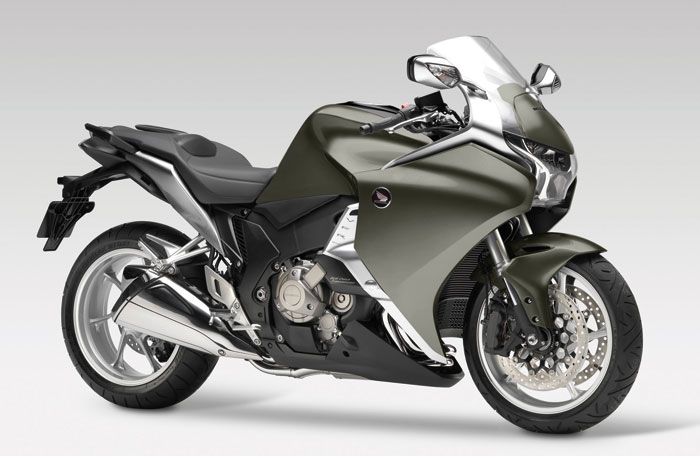
Honda VFR1200FA DCT Key Features


Bringing together the best of Honda innovation and engineering, the VFR1200FA DCT and its Dual Clutch Transmission is nothing short of a technological tour de force.

At the pinnacle of supersport-touring motorcycles stands one simple three-letter name that’s recognized and admired around the world: VFR. The Honda VFR1200FA DCT not only builds on the lofty reputation established by its accomplished predecessors, it raises it to a level that’s untouchable by any other bike out there. Anywhere. The VFR1200FA DCT incorporates technology borrowed from such diverse sources as MotoGP, motocross, and even high-end sports cars – including Honda’s Traction Control system for 2012. With a narrow 76-degree cylinder angle achieved without the need for a counterbalance shaft, a Unicam valve train that cuts weight and adds combustion efficacy, unequal-length exhaust headers that improve power output and produce a sweet, throaty sound, and other innovative thinking, the VFR1200FA DCT engine is nothing short of a technological tour de force. And check out the Dual Clutch Transmission, which has been refined for 2012 to make it smoother-shifting at lower speeds. Using technology borrowed from high-end sports cars, DCT provides two automatic shifting modes in addition to a paddle-shift six-speed manual mode. You can ride city streets and endless highways effortlessly, yet still enjoy sportbike-like character on your favourite twisty backroad.

The distinctive VFR1200F has been developed for 2012. The engine now offers even greater performance, with significantly more refined torque between 2000rpm and 4000rpm. Changes to the PGM-FI fuel injection system, combined with increased tank capacity, mean the VFR1200F can now travel more than 186 miles on a single tank of petrol. The optional Dual Clutch Transmission has been improved, with new functionalities. The adoption of a reassuring Traction Control System and along with a more comfortable seating position, further enhance the bike's all-round capabilities.

Launched in 2009, the VFR1200F was developed to deliver a blend of sports and touring capabilities using the latest technologies. It was a clean-sheet interpretation of the ultimate road-sport machine - a concept driven by extensive understanding of customer needs and the adoption of state-of-the-art technologies.

In pursuit of heightened levels of control and feedback, the VFR1200F adopted the latest race-track bred technologies, adapted and evolved to create a machine that can be many things to many riders. The harmonic growl of the flexible and responsive V4 motor rekindles the emotions inspired by previous iconic VFRs, with its unique 'heartbeat' engine feel and an unrivalled level of refined performance.

Meet the Future.

Revolutionary? Radical? Honda’s incredible VFR1200F is all that, and much more. The list of innovative technology is endless, and there’s even more this year since the 2012 VFR1200F showcases some significant upgrades, improvements and innovations. The super-compact Unicam® design 1237cc V4 engine is fueled by Honda’s Throttle By Wire system, and this year offers more torque and more range. There’s even a new Traction Control system. Together with Honda’s Combined Braking with ABS, this makes the VFR one of the most feature packed bikes out there.

But perhaps most striking of all is the available game-changing six-speed Honda Dual-Clutch Transmission: featuring your choice of changing gears with a pair of F1-style paddle shifters or letting the bike shift itself in either of two riding modes. It’s a feature that has completely blown away even the most cynical magazine test rider. And for 2012 it’s even better, with revised software to optimize the shift points depending on an individual rider’s inputs and riding style. Or, if you prefer, there’s also a second version of the VFR1200F equipped with a conventional six-speed gearbox and a slipper clutch.

The Power of Four

Arguably one of the most advanced streetbike powerplants ever, the VFR1200F’s 1237cc Unicam-head V4 is state-of-the-art engine from top to bottom end. For 2012 it puts out even more low-end torque.

Dual-Clutch Transmission

Shift gears with a simple flick of your left finger or thumb? That’s just one of the modes on the VFR1200F’s incredible new dual-clutch transmission (optional). Upgraded software for 2012 makes it even better by optimizing the shift points depending on an individual rider’s inputs and riding style.

High-Performance Art

The VFR1200F’s layered concept fairing offers a smooth, unified, fastener-free surface right off the MotoGP circuit. Never have aerodynamics and aesthetics worked so well together.

2012 Honda VFR1200FA DCT Key Features

Engine / Drivetrain

New for 2012, the VFR1200FA DCT’s Traction Control system carefully monitors a range of different parameters, looking for unusual fluctuations that could suggest an imminent loss of traction at the rear tire. If the system believes wheelspin is imminent, engine power is momentarily reduced, thereby maintaining traction..

Light and compact 1,237 cc liquid-cooled 76-degree V-4 engine pumps out amazing levels of power with a distinctive feel and sound..

By combining many of Honda’s most advanced technologies, engineers managed to create a remarkably compact engine that’s both smaller and lighter than the V-4 engine in the VFR800A..


Unique cylinder layout locates the rear cylinders side by side but close together, and the front cylinders more widely spaced. This layout allows for a slim, compact “waist” that fits comfortably between the rider’s legs. It also improves mass centralization, thereby contributing to the bike’s balanced feel and ease of control..


The engine also incorporates a special high-strength Symmetrically Coupled Phase-shift Crankshaft that features a 28-degree crankpin offset that works in concert with the 76-degree V angle to essentially negate primary engine vibration for smooth running.

And because the powerplant now has perfect primary balance, the need for a balance shaft is eliminated, which allows for a more compact engine and also yields a weight savings of nearly 1.4 kg (3 lb)..

Lightweight and compact Unicam™ valve train allows for significantly shorter and smaller cylinder heads with no loss in efficiency. It’s the same technology used in Honda’s potent CRF motocross bikes..


Also borrowed from the CRF range and the RC211V MotoGP bike is the sealed crankcase system that reduces the pumping loss created through piston movement, marking the first time this system has been used on a street motorcycle..


The engine’s performance is delivered where it’s most useful and most enjoyable. Its linear torque curve – with increased drive between 2,000 and 4,000 rpm for 2012 – is focused in the low-end and midrange, making it possible for the rider to simply roll on and off the throttle while powering through bends. This effortless control makes the VFR1200FA great fun to ride – this is a sportbike with real-world-usable power..

Asymmetrical exhaust lengths between front and rear cylinders further improve power output and add to the VFR1200FA DCT’s unique sound and feel..

Engineered to provide excellent cornering clearance and minimal intrusion to the feet of the rider and passenger, the high-volume, twin-outlet muffler produces an unobtrusive but fantastically stirring note. At low revs the sound is almost like a human heartbeat.

Further up the rev range, once the internal servo-operated exhaust valve is opened, the sound changes to a truly inspiring, hard-edged V-4 howl..

The Dual Clutch Transmission (DCT) includes two automatic modes and a Manual mode with paddle-style shifters, and is similar to systems found on high-end sports cars. Its mechanical efficiency matches that of a manual gearbox, meaning you get to enjoy the convenience of an automatic with the unbridled performance of a manual..

A throttle-by-wire system replaces the throttle cable with sophisticated electronics. It provides light, precise fuel metering at all engine rpm, the system’s accuracy gives the rider increased levels of control..

DCT and throttle-by-wire technology allow quick downshifting and exhilarating control under deceleration when the transmission is in Manual mode..

The next-generation shaft-drive system routes the shaft below the swingarm pivot point to eliminate the squat and lift of conventional shaft drives without resorting to complex and heavy countermeasures as found on some competing models. Special dampers eliminate any excessive slack or jerkiness in the system, resulting in smooth on- and off-throttle transitions.


Chassis / Suspension

The patented layered fairing design creates a uniquely beautiful shape and, at the same time, optimal airflow and heat management.

The fairing incorporates two layers. Air entering between the layers and through two oval-shaped spaces in the front of the fairing is channelled in exactly the directions needed to enhance the bike’s stability at higher speeds. Plus, by channelling air through smaller apertures before it reaches the radiators and thereby increasing its velocity, engine cooling is optimized and the hot, exhausted air is carried quickly away from the rider and passenger for a cooler, more comfortable ride. The heat generated by the engine is also channelled away to keep hot air away from the rider..


Honda Pro-Arm single-side swingarm with single gas-charged shock features a handy remote spring-preload adjuster, rebound damping adjustability, and 130 mm (5.1 inches) of travel. At the front the VFR1200FA DCT boasts a stout, sport-oriented 43 mm inverted cartridge fork with spring preload adjustability and 108 mm (4.3 inches) of travel..


The VFR1200FA DCT is equipped with a sophisticated braking system that’s ideal for all-round sportbike use. Powerful new six-piston calipers for the front and a two-piston caliper at the rear act on large full-floating discs (320 mm front; 276 mm rear).

Honda’s Combined Braking System creates the optimal balance of front and rear braking forces, while the compact and lightweight Anti-lock Braking System (ABS) lets you brake with confidence on even difficult surfaces.


Additional Features

Larger fuel tank means more kilometres of fun between gas stops..

New-technology seat construction permits a higher level of seat shaping and forming detail for excellent rider and passenger comfort and a sleek look..

Integral saddlebag mounts come standard..

New painting technologies, specially developed at Honda’s new high-tech Kumamoto factory, result in a level of finish far above normal production standards..

The handlebar and the layout of the controls are the result of careful study of ergonomics and rider needs. The designers looked at the time required to reach controls comfortably and the ease of operation— particularly during cornering

2012 Honda VFR1200FA DCT Features and Benefits

Engine
Stronger torque NEW
For 2012 the V4's already impressive torque has been made stronger still, with increased drive between 2000rpm and 4000rpm.

Traction Control System NEW
For 2012 the VFR1200F also benefits from Honda's Traction Control System , which helps ensure the power is put down optimally, safely and securely, even on surfaces with limited grip.

Dual Clutch Transmission (optional) NEW
The VFR1200F was the first motorcycle to feature Honda's innovative Dual Clutch Transmission, which has been significantly developed for the 2012 model. Honda's Dual Clutch Transmission ensures even smoother and seamless gear changes in any of its three riding modes. Using two electronically controlled clutches, the system offers the choice of manual gear shifting and two fully automatic modes, one for general use (D-mode) and another for high performance riding (S-mode). The VF1200F's Dual Clutch Transmission also features new software logic with added functionality.


Ergonomic Design
Greater comfort NEW
The new seat design features new stitching and a new coating finish for improved seat grip and improved quality.

Model details

Styling
Designed in Europe
The designers of the VFR1200F drew on two threads of Japanese culture through the design process. The Japanese word 'Ma' can be described as 'the space between things'. It is perhaps easiest to understand it in relation to music. If one thinks of the intrinsic importance of a measure of silence or the pause between movements in a classical symphony, and the effect on the performance if someone accidentally applauds or disturbs the silence. That illustrates the importance of 'Ma'. The other concept 'tsuya' describes the shine or vitality of an object, its charm, and the way it attracts and holds the eye. Focusing on tsuya gives a new significance to every line, curve and angle. Both these elements were of paramount importance to the design philosophy. The LED indicators used for the first time on a large capacity Honda motorcycle, ensures optimum visibility.

Form follows function
To a large degree; pure function determined the VFR1200F's form. Mass centralisation, consummate rider control and aerodynamic efficiency provided the key underlying design criteria and from this starting point the machine's form evolved. The remarkably narrow cylinder heads and clever cylinder spacing allowed a very narrow waist, effectively lowering the seat height and thus making it easier for the rider to place both feet flat on the ground at rest. This wasp-like waist also gives the rider the feeling of being 'in' the bike rather than perched on top - crucial for feedback and control. The fuel tank's elegant yet complicated contours support and assist the rider to add extra elements of control and heightened levels of feedback whatever the riding situation. The ergonomically styled fairing works in harmony with the fuel tank to provide extra support and efficient weather protection for the rider and pillion. Even the hand controls and switchgear are engineered to ergonomic advantage.


Layered fairing technology
The patented layered fairing design of the VFR1200F is a perfect match of form and function. Designers and engineers worked together to create a uniquely beautiful shape and, at the same time, optimal air flow and heat management. The fairing design incorporates two layers, which harnesses the benefits of flowing air to the machine's dynamic and mechanical advantage. This has two functions: air entering between the layers and through two oval-shaped spaces in the front of the fairing is channelled in exactly the directions needed to enhance the bike's stability at higher speeds. Secondly, by effectively increasing the speed of the air by channelling it through smaller apertures before it reaches the radiators, engine cooling is optimised and the hot, exhaust air is channelled away from the rider and passenger. The heat generated by the powerful V4 engine is also channelled away to keep hot air away from the rider.

Attention to detail
A balance of positive and negative surfaces gives the front of the motorcycle a light, open look while also creating a profile that slices through the wind with minimal resistance. A strongly defined X-shape characterises the front of the machine. Concave surfaces direct the eye and air up towards the windscreen, which incorporates another air-directing aperture at its lower edge. Even the edges of the screen have been crafted to enhance stability at speed. The light from the powerful single line-beam headlight streams into two tinted LED-look strips that frame it, increasing the feeling of lightness and space.

The cowl and body are fused together, creating one smooth, unified, aerodynamic surface. The compact rear tapers upwards, emphasising the bike's lightness and dynamic shape, while the tail-light and rear indicators subtly mimic the frontal design.

Luxurious finish
The 2012 machine continues to benefit from painting technologies specially developed at the hi-tech Kumamoto factory, focused on creating top-quality colouring with the most uniform coverage. A deep clear-coat finish enhances the bodywork colour, creating a luxurious, high-class shine. The mirror-like surfaces create a sharp, memorable profile that attracts attention even from a distance.

Engine
Even stronger midrange performance NEW
The VFR1200F engine was designed to provide its rider with strong power and torque, for a power delivery that is both responsive and exciting. It also delivers the invigorating engine sound and feel that have characterised Honda's previous V4 machines. The VFR1200F has already established a reputation for delivering both effortless travel and an invigorating riding experience; the V4 engine's performance has always been most impressive at the engine rpm that matter most, in the low and midrange, making it possible for the rider to simply roll on and off the throttle while powering through bends. For 2012, low-rpm torque has been made stronger still, with increased drive between 2000rpm and 4000rpm to make the bike even more fun to ride.

Improved fuel efficiency NEW
For 2012 the VFR1200F's advanced PGM-FI fuel injection has been revised to improve fuel efficiency. This, in conjunction with an increase in tank capacity of half a litre to 19 litres, means the VFR1200F can now cover more than 186 miles on a single tank of fuel.

Smooth delivery
There were several challenges involved in tailoring the strong V4 power for use in an all-round machine that can be used for weekend enjoyment, commuting and long-distance touring. Key elements of the VFR1200F's power characteristics are its response and strong torque delivery. To allow full enjoyment of the engine's power while still providing a high level of comfort, vibration needed to be carefully managed.

A unique cylinder layout was developed for this purpose. Instead of the traditional V4 cylinder configuration, with the cylinders evenly spaced front-to-rear, the VFR1200F adopts an ingenious solution in order to centralise mass and at the same time achieve a compact, space-saving solution. The rear cylinders are placed side by side but close together, while the front cylinders are more widely spaced. This layout allows for a slim, compact 'waist' that fits comfortably between the rider's legs. It also supports mass centralisation, thus contributing to the bike's balanced feel and ease of control. With no right-left couple imbalance, the need for a balancer is eliminated and friction is reduced.

A Phase-shift Crankshaft complements the advantages of the cylinder layout. Operating with a 28° throw, it effectively reduces primary vibration and noise, eliminating the need for a power-sapping balance shaft. The V4 is characterised by very strong low-rpm torque. To allow the rider to comfortably take full advantage of this torque, delivery is smoothed by four drivetrain dampers, which further eliminate uncomfortable vibration and backlash.

Racing technologies
The VFR1200F utilises the UNICAM single overhead camshaft cylinder head design from the world-class CRF off-road machines. The logic was straightforward: in an environment where space, performance and weight are at a premium this technology was perfect for a project where mass centralisation and ergonomics were prime design criteria. Also borrowed from the CRF range and the RC211V MotoGP racer is the sealed crankcase system that reduces the pumping loss created through piston movement, and air density. This system had never been used on a road machine before but the gains for the rider are identical - electrifying throttle response and improved fuel consumption.

Refined control
A throttle-by-wire system maximises the rider's feeling of connectivity with the VFR1200F. Providing light, precise fuel metering at all engine parameters, this highly developed system gives the rider heightened levels of control, whatever the situation. To aid control under intense deceleration a slipper clutch is fitted, similar to the system on the CBR1000RR Fireblade. When the rider downshifts early the clutch is designed to slip, thus preventing the rear wheel from inadvertently locking up, allowing the rider to stay firmly in control.

Innovative transmission layout and ground-breaking shaft drive system
A compact transmission layout contributes to high-speed stability with good handling and excellent traction capability. The highly developed shaft drive system features an offset propeller shaft and a pivot that expands vertically as well as a sliding constant velocity joint that takes up any variations in length during the rear wheel's arc of travel. At the output shaft a clutch damper absorbs backlash effectively. Thanks to the rigidity of the pivot, stability is improved and throttle-to-drive delivery is much more direct.

Unique exhaust and exhilarating sound
Engineers and designers alike focused not only on the engine's power and delivery, but also on its feel and sound. They chose a configuration which would emulate the briskness of a typical inline-4 engine's performance but deliver this with the beat and feel that are pure V4. The exhaust layout was made as compact as possible with the assembly of catalyser-containing exhaust pipes placed on one side of the sump and the exhaust pipes of the rear cylinder bank placed on the other side. On the bike's right flank a triangular-shaped muffler highlights the styling lines of the bodywork.

The combined induction and exhaust notes create a raw, compelling sound that is authentic Honda V4 and distinguishes the VFR1200F from any other motorcycle. At idle it pulses smoothly, hinting at the engine's huge performance potential. Each twist of the throttle releases a burst of instant V4 aggression that becomes a thrilling howl as it rises quickly through the revs. The sound and beat of this engine contribute to the unique character of the machine and are as essential to the design as the bodywork or riding position.

A key element in the raw emotion of this V4's sound is the exhaust system. Engineered to provide excellent cornering clearance and minimal intrusion to the rider's and pillion's feet position, the high-volume, twin outlet high-chrome muffler produces an unobtrusive but fantastically stirring note. At low revs the noise is off-beat and bass-rich. Further up the rev range, once the servo-operated valve is opened, the noise changes to a truly inspiring, hard-edged V4 growl.


Suspension
Peerless handling and stability
The VFR1200F frame, suspension and drive components are brought together in a unique configuration that facilitates both sports bike power and smooth stability. Its strong aluminium twin-spar diamond configuration frame is both lightweight and rigid. The swingarm and driveshaft length are optimised without extending the overall length of the motorcycle. The long swingarm contributes to balanced, confident manoeuvring and exceptional high-speed stability.
The swingarm is complemented by a compliant Pro-Link rear shock absorber with adjustable rebound damping. At the front, sturdy upside-down 43mm telescopic forks with adjustable preload provide smooth and assured control. Together, these systems ensure a comfortable ride, even with a pillion and luggage on board, and add to the overall feeling of total control.


Brakes
High-performance braking systems
The VFR1200F is equipped with Honda's highly-developed Combined Antilock Braking System. Powerful six-piston calipers for the front and two piston calipers for the rear act on large discs (320mm at the front and 276mm at the rear). The Combined Braking System creates the optimal balance of front and rear braking forces. The addition of a standard-fit compact and lightweight Anti-lock Braking System supports both the motorcycle's sports riding potential and its touring proficiency.


Ergonomic Design
Comfortable dual-seat seat NEW
For 2012 the seat of the VFR1200F - a supportive, vacuum-moulded dual-seat design - has been re-designed to offer improved seat grip with new stitching and improved quality with a new seat coating finis. It features a flat and expansive seating area, with the space to adopt a range of different seating positions. This improves comfort during long days on the road. For the pillion, easy-reach grab handles and footrests ideally positioned for comfort, help create a reassuring sense of security.

Instrument panel
The VFR1200F instrument panel combines sophisticated styling and practicality. Shielded and at the same time displayed by the tilt of the aerodynamic windscreen, its elegant design fully complements the airy and spacious feel at the front. It also adds to the sensation of total rider control. A large, sporty analogue rev counter and a digital speedometer are surrounded by LCD readouts which now include actual, average fuel consumption as well as remaining and range of fuel and Traction Control System activation (On/Off). The display also includes a clock, ambient temperature display, HISS indicator and ABS indicator.

Pannier mounts
To enhance the touring potential of the VFR1200F, the rear is equipped with integrated luggage mounts. These mounting points are unobtrusively cast into the injection moulded under-seat area and pillion footrest mounts. They allow easy installation and removal of specially designed optional panniers without interrupting the motorcycle's clean styling.

Ergonomic hand controls
The VFR1200F features a state-of-the-art ergonomic design of the handlebar and switch layout. The designers focussed on meeting the rider's need to reach controls comfortably and for ease of operation, particularly considering the hand position during cornering. As a result, the VFR1200F received new handlebar switches and a new layout with reversed horn and indicator controls. The indicator switch shape is designed around natural thumb movement for effortless operation.

Colours
The 2012 VFR1200F will be available in four colours (from mid 2012)
- Darkness Black Metallic
- Candy Prominence Red
- Candy Tahitian Blue NEW
- Titanium Blade Metallic NEW

Model history
It has been over three decades since Honda marked its return to Grand Prix competition by developing the first Honda engine with a V4 four-stroke configuration. In the intervening time the V4 formula has been tempered in the fires of competition and honed for more power and better delivery. The NR500, RC30, RVF400, NR750, RC45, VFR750 and RC212V are just some of the milestones that mark the V4 story.

The VFR lineage reaches back to the track-dominating RS and RVF750, but the first use of a V4 engine in a road bike was the pioneering VF750. Unveiled in 1982, it combined smooth, effortless performance with a practical, easy-maintenance design. The first VFR750 was launched in 1986 and immediately became the standard by which every all-round sports motorcycle was judged. With a restrained and sophisticated body concealing the finest technology and equipment, it was developed to be instantly 'right' for every rider. It was a comfortable and flexible Sport Tourer, with the emphasis placed firmly on 'Sport'. Since then, Honda has treated the VFR as its flagship for new road-going technologies, which are often developed and tested first in the laboratory of MotoGP.

The VFR800 made its debut in 1998. Based around the engine from the RC45 it stayed true to the concept of taking lessons learned on the racetrack and fine-tuning them for road use. In 2002 it received an upgraded fuel injection system, revolutionary new V-TEC valve control system and revised brake systems including optional ABS. Subsequent updates have revised the power delivery and upgraded the bike's consistently contemporary styling. The racetrack is still the source and test environment for its technologies, while its all-round usability and ample smoothly delivered power have continued to lead its class.

The 2009 VFR1200F was the product of a truly international design team, one that included three Japanese members, one American and one European. Guided by the infinitely experienced Kishi-san (CBR1100XX Blackbird) and overseen by Yosuke Hasegawa, the team was not only culturally varied but also spanned generations. Their collective goal was to create a sports bike with long-distance capabilities. To foster the right mindset the designers imagined waking up to a perfect day and deciding impulsively to ride devouring large stretches of highway, effortlessly, before carving through twisty canyon roads, just to enjoy lunch in a beautiful location before riding home again.

The VFR1200F designers began sketching their ideas in a remote hotel outside Rome. These sketches took many forms and explored every possibility and, rather than refine these elements into one final design, the team headed back to Tokyo with all their individual drawings.
On the VFR1200F project, designers and engineers worked in parallel, discussing and perfecting their solutions as the clay model and sketches evolved. European designer, Teofilo Plaza, described this six month-long experience as one of the most intense and passionate of his life. Many months of testing and development lay ahead - a period in which designers and engineers continued to work in unison.

The first V4 Concept model was unveiled to a stunned audience at the Intermot show in October 2008. The radically styled show bike perfectly displayed the free thinking that had absorbed the design team from day one of this revolutionary project. At its 2009 launch, while the V4 heritage of the VRF1200F may have been patently obvious, it was evident that this machine far surpassed anything that had gone before.

Optional equipment

A wide range of optional equipment has been developed by Honda Access Europe specifically for the VFR1200F. These accessories were designed in line with the new all-round sports bike concept and in every detail, from the choice of materials to integration with the bike's contours, they complement its styling and performance. They include:

- 29-litre pannier set: Fits motorcycle's integral pannier attachments with no need for additional stays. Aerodynamically shaped. Coloured to match the motorcycle's bodywork. Operated with the motorcycle key. Left pannier can hold one full-face helmet.

- 31-litre top box: Features locking, quick-detach mounting system. Lid matches motorcycle's bodywork. Can hold a full-face helmet as well as other luggage.

- Inner bags for the top box and panniers: Black with zipper and Honda Wing logo. Carrying straps and handles included. Pannier inner bags can be zipped together for easy carrying.

- 7-litre tank bag: Black with embroidered VFR logo. Includes preset for easy installation. Adjustable shoulder strap, carrying handle and rain cover included.

- 3-position adjustable add-on screen: Integrates perfectly with the standard windscreen. Extends wind protection for taller riders. WVTA approved (what does WVTA stand for?)

- Replacement low/narrow seat: Maintains the bike's ergonomics. Provides easier reach to the ground for shorter riders. 25mm lower than factory standard seat.

- Heated grips: Kit includes integrated controller. Compact for maximum comfort and design integration. 3-step variable heating levels.

- Motorcycle navigation kit: Features unique controller that allows operation without removing hands from the handlebars. Earphone and car kit included. Honda dealers included in POI list.

2012 Honda VFR1200FA DCT - American Specifications
USD MSRP Price - NA USD

ENGINE
Engine Type 1237cc liquid-cooled 76 degrees V-4
Bore And Stroke 81mm x 60mm
Induction Programmed Fuel Injection (PGM-FI) with automatic enrichment circuit, 44mm throttle bodies and 12-hole injectors
Ignition Digital transistorized with electronic advance
Compression Ratio 12.0:1
Valve Train SOHC; four valves per cylinder

DRIVE TRAIN
Transmission Six-speed with two automatic modes and manual mode
Final Drive Shaft

CHASSIS / SUSPENSION / BRAKES
Front Suspension 43mm cartridge fork with spring-preload adjustability; 4.7 inches travel
Rear Suspension Pro Arm single-side swingarm with Pro-Link® single gas-charged shock with remote spring-preload adjustability and rebound-damping adjustability; 5.1 inches travel
Front Brake Dual full-floating 320mm discs with CBS six-piston calipers with ABS
Rear Brake Single 276mm disc with CBS two-piston caliper with ABS
Front Tires 120/70 ZR-17 radial
Rear Tires 190/55 ZR-17 radial

DIMENSION
Rake 25.5° (Caster Angle)
Trail 101.0mm (4.0 inches)
Wheelbase 60.8 inches
Seat Height 31.9 inches
Curb Weight tbd
Fuel Capacity 5.0 gallons

OTHER
Model Id VFR1200F Dual Clutch Transmission
Available Colors Candy Blue
Emissions Meets current California Air Resources Board (CARB) and EPA standards.

FACTORY WARRANTY INFORMATION
One Year Transferable, unlimited-mileage limited warranty; extended coverage available with a Honda Protection Plan.

2012 Honda VFR1200FA DCT - Canada Specifications
Candian MSRP Price - $18,999 CDN

Engine Type Liquid-cooled 76-degree V-4 with asymmetrical front/rear cylinder layout
Displacement 1,237 cc
Bore & Stroke 81 mm x 60 mm
Compression Ratio 12:1
Valve Train Chain-driven SOHC Unicam, 4 valves per cylinder
Fuel Delivery PGM-FI electronic fuel injection
Transmission Dual Clutch Transmission with two automatic shift modes and a manual shift mode via paddle-style shifters
Final Drive Shaft
Front Suspension 43 mm cartridge fork with spring preload adjustability; 108 mm (4.3 in.) travel
Rear Suspension Pro Arm single-side swingarm with Pro-Link single gas-charged shock with remote spring preload adjustability and rebound damping adjustability; 130 mm (5.1 in.) travel
Tires 120/70ZR - 17 radial front; 190/55ZR - 17 radial rear
Brakes Front dual 320 mm discs with six-piston calipers; rear single 276 mm disc with two-piston caliper. Combined Braking System with ABS (Anti-lock Braking System)
Ground Clearance n/a
Seat Height 810 mm (31.9 in.)
Wheelbase 1,545 mm (60.8 in.)
Curb Weight 278 kg (613 lb) including required fluids and full tank of gas - ready to ride
Fuel Capacity 18.5 litres
Colour Candy Tahitian Blue
Warranty 1 year, unlimited mileage, freely transferable warranty; extended coverage available with Honda Plus

2012 Honda NC700XA - European Specifications
EU MSRP Price - See dealer for country pricing.

Engine

Type Liquid-cooled 4-stroke UNICAM 76° V-4
Displacement 1,237cm3
Bore x Stroke 81 x 60mm
Compression Ratio 12: 1
Max. Power Output 127kW/10,000min-1 (95/1/EC)
Max. Torque 129Nm/8,750min-1 (95/1/EC)
Idling Speed 1050-1250min-1
Oil Capacity 4litres

Fuel System

Carburation PGM-FI electronic fuel injection
Aircleaner Oil-permeated, viscous-type paper filter
Fuel Tank Capacity 19litres
Fuel Consumption 16.4km/l (46.3mpg - Tested in D-Mode WMTC mode*)

Electrical System

Ignition System Computer-controlled digital transistorised with electronic advance
Ignition Timing 8.4° BTDC (idle speed)
Sparkplug Type IMR9E-9HES (NGK); VUH27ES (DENSO)
Starter Electric
Battery Capacity 12V/11.2AH (YTZ14)
ACG Output 570W
Headlight 12V, 55W x 1 (low)/55W x 1 (high)

Drivetrain

Clutch Wet, multiplate, hydraulic, dual
Clutch Operation Hydraulic
Transmission Type 6-speed
Primary Reduction 1.738 (73/42)
Gear Ratios 1 2.466 (37/15)
2 1.789 (34/19)
3 1.409 (31/22)
4 1.160 (29/25)
5 1.032 (32/31)
6 0.939 (31/33)
Final Reduction 2.706 (39/41 x 19/17 x 28/11)
Final Drive Shaft

Frame

Type Diamond; aluminium twin-spar

Chassis

Dimensions (LxWxH) 2,244 x 752 x 1,222mm
Wheelbase 1,545mm
Caster Angle 25.5°
Trail 101mm
Turning Radius 3.45m
Seat Height 815mm
Ground Clearance 128mm
Kerb Weight 277kg
Loaded Weight 473kg

Suspension

Type Front 43mm cartridge-type telescopic fork with stepless preload adjustment, 120mm axle travel
Rear Pro-Link with gas-charged damper, 25-step (*stepless remote-controlled hydraulic) preload and stepless rebound damping adjustment, 130mm axle travel

Wheels

Type Front 5-spoke hollow gravity die cast aluminium
Rear 7-spoke gravity die cast aluminium
Rim Size Front 17M/C x MT3.5
Rear 17M/C x MT6
Tyre Size Front 120/70-ZR17M/C (58W)
Rear 190/55-ZR17M/C (75W)
Tyre Pressure Front 250kPa
Rear 290kPa

Brakes

Type Front 320mm dual floating hydraulic disc with two 6-piston callipers, C-ABS and sintered metal pads
Rear 276mm hydraulic disc with 2-piston calliper, C-ABS and sintered metal pads
READ MORE - Honda VFR1200FA DCT Key Features

Thursday, November 1, 2012

Yamaha R1


electronics package could be better too as we didn’t find Yamaha’s D-SMS adjustable throttle map system to be very useful. This piece of electronics allows the rider to adjust the sensitivity of the throttle. By default the engine is in ‘Standard’ mode. ‘A’ mode increases the sensitivity of the throttle and ‘B’ decreases it. Our testers preferred ‘Standard’ or ‘B’ mode as ‘A’ mode made the engine feel like it surged too aggressively during delicate throttle situations like moments after hitting the apex of corners. We understand that the objective is to offer options to the riders but we would prefer to have more useful options than the R1 maps offer.

“The Yamaha feels okay… It’s actually pretty similar to the other Japanese bikes ergonomically,” states Gauger. “The dash is easy to read and the riding position isn’t cramped, I just didn’t really like how wide it felt. It was also sort of heavy too, which made it a bit more-tricky to manhandle during low-speed corners and maneuvering it in parking lots.”

A tall first gear makes escaping stop lights on the Yamaha YZF-R1 harder than you’d expect from a liter bike. It requires a fair amount of clutch slippage to get it rolling and that made it difficult to get a perfect launch during drag strip testing. Fortunately the clutch lever action is light and offers good feel which offsets the fact that you have to really drag it to get a good launch. The rest of the drivetrain components including the six-speed transmission, final drive gearing (17/47) and slipper clutch were all rated highly and tied the Honda for second-highest honors.

In our acceleration tests the Yamaha registered a 0-to-60 time of 3.08 seconds which put it last along with the hard-to-launch 1198. Granted both those bikes and the RC8R all took more than three seconds to reach 60 mph. At the drag strip it finished the quarter mile in 10.38 seconds at 139.3 mph, which once again had it languishing near the back of the pack along with the Italian and Austrian Twins. We attributed to its modest engine power output paired with excessive weight and tall first gear to this showing. It gearing was very good for the track this time around, but it hurt the Yamaha in head-to-head performance tests.

Our Dynojet 250i revealed that the R1’s engine, despite being the most popular in terms of exciting the rider’s senses, ranked toward the back of the class in outright power. At 5000 rpm it’s cranking out the lowest amount of torque before eventually catching up with the Kawasaki, BMW and Suzuki for a moment. Shortly thereafter it belts out its peak torque of 75.65 ft-lb at 9000 rpm and then it begins to taper off. The Yamaha R1 does finish ahead of the high-strung ZX-10R in the torque battle but it doesn’t have the same horsepower to make up for it that the Ninja does. The horsepower curve mimics the Kawasaki at lower rpms but it eventually peters out early with its second-lowest in class total of 152.13 hp at 11,800 rpm. Only the 1198 makes less power but again, keep in mind that the 1198, RC8R, CBR, GSX-R and R1 are only five horsepower apart. It’s the pesky Ninja and S1000RR that make the rest of the field seem feeble with their 163 and 183 horsepower figures respectively. Like we mentioned already, what the R1 lacks in outright performance it sure makes up in personality.

In Yamaha’s defense it is operating with the second-quietest exhaust note of 79 dB as measured at idle and the quietest tune of 94 dB at half of max rpm (6750). Many of our testers were raving about how awesome the engine sounds with its guttural roar more related to that of a small-block V8 than a sport bike. Equally as pleasant is how well balanced the engine is, virtually devoid of annoying vibration except at very low rpm, the R1 never makes your hand go numb because of unwanted vibes.

Perhaps it was our heavy throttle hand, but the R1 registered the worst fuel mileage of the test and even finished behind the 200cc larger Twins. We recorded a 28.6 mpg average which equates to a range of 137.2 miles. For comparison the GSX-R was the second-worst Four-Cylinder and it registered 33.9 mpg. The ZX with its small fuel tank and average fuel economy offers the next lowest range at 154 miles, 17-more than the R1. Again, it’s hard to stay off the throttle on the Yamaha though – that engine just sounds so damn good that we would be willing to give up a few mpg just to hear it howl.

READ MORE - Yamaha R1

BMW R1200GS


BMW R1200GS
BMW refurbished its iconic Flat Twin Boxer with a new cylinder head and not an increase in displacement.

The new DOHC radial valve head delivers an extra 5 hp and 3 lb-ft of torque, as well as a 500 rpm higher redline.
It was expected that BMW would debut an upgrade to its iconic Flat Twin Boxer for the 2010 R series. Now the details are revealed, as 2010 motorcycle info leaks prior to the upcoming EICMA Milan Bike Show. Here’s what the spec sheets and PR machine say about the new Boxer.

Same Displacement: No, the Boxer is not gaining any CC. Bore and stroke is identical at 101 x 73mm with the 1170cc displacement unchanged.

New DOHC Cylinder Head: The 2010 Boxer cylinder heads feature cylinder head upgrades first used on the HP2 Sport. The DOHC design sources two chain-driven camshafts, with each camshaft controlling both an intake and exhaust valve in the radial four-valve head. The valves themselves have changed, with diameter increased on both intake (1.42-1.54 inches) and exhaust (1.22-1.30 inches), with valve lift also increased. Compression ratio is unchanged at 12:1, however, a new combustion chamber shape necessitates the use of red-designed cast-aluminum pistons.

Larger Air Intakes: New black throttle butterfly manifolds are larger, up 0.12 inches to 1.97, and work with redesigned intake manifolds and air filter element.

Performance Gains: All the motor tweaks add up to more power and a higher-revving Twin. Peak horsepower claims jump 5 hp to 110 total, with torque up 3 lb-ft to 88. The peak outputs come at a higher rpm, a respective 7750 (up 250 rpm) and 6000 (up 500 rpm). The redline jumps an extra 500 rpm as well, to 8500. Overall, BMW claims the modifications “provide a significantly more homogeneous flow of power and torque throughout the entire speed range.”

Throatier Exhaust: The exhaust system looks identical to its predecessor, but BMW promises a sweeter tune with a new internal structure to the rear can, along with an electronically-controlled exhaust flap. BMW describes the new decibels as “a particularly throaty Boxer sound naturally in full compliance with legal standards.” Naturally.

The new Boxer motor headlines the upgrades to three 2010 R-series machines announced by BMW: the popular BMW R1200GS and its Adventure sibling, as well as the R1200RT tourer.

READ MORE - BMW R1200GS

Saturday, October 27, 2012

Ducati Diavel Cromo Specs


Ducati Diavel Cromo Specs
Engine
Type Testastretta 11°, L-Twin cylinder, 4 valve per cylinder, Desmodromic, liquid cooled
Displacement 1198.4cc
Bore x Stroke 106 x 67.9mm
Compression Ratio 11.5:1
Power 162hp (119kW) @ 9500rpm (claimed at the crankshaft)
Torque 94lb-ft (127.5Nm) @ 8000rpm (claimed at the crankshaft)
Fuel Injection Mitsubishi electronic fuel injection system, Mikuni elliptical throttle bodies with RbW
Exhaust Lightweight 2-1-2 system with catalytic converter and two lambda probes. Twin aluminium mufflers
Transmission
Gearbox 6 speed
Primary Drive Straight cut gears, ratio 1.84:1
Ratio 1=37/15 2=30/17 3=27/20 4=24/22 5=23/24 6=22/25
Final Drive Front sprocket 15; Rear sprocket 43
Clutch Light action, wet, multiplate clutch with hydraulic control. Self-servo action on drive, slipper action on over-run.
Chassis
Frame Tubular steel Trellis frame
Front Suspension Marzocchi 50mm fully adjustable usd forks
Front Wheel 14-spoke in light alloy 3.50 x 17
Front Tire 120/70 ZR 17 Pirelli Diablo Rosso II
Rear Suspension Progressive linkage with fully adjustable Sachs monoshock. Aluminium single-sided swingarm
Rear Wheel 14-spoke in light alloy 8.00 x 17
Rear Tire 240/45 ZR17 Pirelli Diablo Rosso II
Front Wheel Travel 120 mm (4.7 in)
Rear Wheel Travel 120 mm (4.7 in)
Front Brake 2 x 320 mm semi-floating discs, radially mounted Monobloc Brembo callipers, 4-piston with ABS
Rear Brake 265 mm disc, 2-piston floating calliper with ABS
Instrumentation Handlebar mounted instrumentation with LCD display: speed, rpm, time, coolant temp. Warning lights for: Neutral, turn signals, high-beam, rev-limit, DTC intervention, ABS status, oil pressure, fuel reserve. Tank mounted instrumentation with TFT colour display: gear selected, air temp, battery voltage, trips 1 & 2, fuel reserve trip, average and actual fuel consumption and speed, trip time, scheduled maintenance. Full status and/or management of Riding Modes, DTC, RbW and ABS.
Dimensions and Weight
Dry Weight 210 kg (463 lb)
ABS Wet Weight 239 kg (527 lb)
Seat Height 770 mm (30.3 in)
Wheelbase 1590 mm (62.6 in)
Rake 28°
Trail 130 mm (5.12 in)
Fuel Tank Capacity 17L - (4.5 US gal)
Versions Dual seat
Standard Equipment
Standard Equipment Riding modes, ABS, DTC, RbW
Warranty
Warranty 2 years unlimited mileage
Maintenance Service Intervals 12,000 km (7,500m)
Valve Service Check 24,000km (15,000m)


Motion exposes Ducati’s go-fast intentions, and for the Diavel, that begins with the motor. Strapped to Hypercycle’s dyno the Cromo produced 134.5 rear-wheel horsepower at 9400 rpm and 80.1 ft.-lb. of torque at 7900 rpm from its Testastretta 11° engine. Twist a handful of right grip and the deeply curved seat immediately makes sense. While it tends to lock its rider into a single position, the backstop it provides when unleashing the engine’s potential is welcome support considering the bike’s upright seating arrangement.

In the hands of MO’s dragstrip specialist, Duke put the Diavel through the lights at Famoso Dragway outside Bakersfield, California, in a very respectable time of 10.32 seconds at 131.29 mph. Corrected for temperature and air pressure, the ET converts to a seriously quick 9.95-second pass. Yes, we did run the Cromo against the VMax but we’re withholding that information for our upcoming shootout between these muscle-bike beasts.


The Diavel is fairly easy to launch and gets out of the hole quickly.


On the street and in the corners the Diavel Cromo blurs the lines between cruiser and sportbike. “Despite its cruiser pretense, this is one factory custom that doesn't need to shy away from a twisty canyon road,” Duke says. Despite its conservative rake and trail figures and its wide swath of rubber out back, initial lean-in is easy to achieve, but it’s leveraging that 240mm wide tire to its edge that’s trying.

“When you get it leaned over, the front feels like it's going to slide out from under you,” says Siahaan. “It won't, but you have to slowly work up to that level of trust with the Diavel.”

Another eminent performance attribute are the Diavel’s brakes. “Its Brembos are notably strong, but their initial bite might be a little too abrupt for anyone accustomed to typical cruiser brakes,” notes Duke.


The passenger grab handle disappears beneath the passenger seat when not in use, as do the passenger footpegs which discreetly fold away.


Included in the Cromo’s asking price is an array of electronic gadgetry such as ABS, DTC, riding modes and ride-by-wire throttle, while suspending the bike is a fully adjustable 50mm Marzocchi fork and a Sachs progressive linkage monoshock, both fully adjustable. As mentioned earlier, these components are identical to those on the lesser expensive standard model Diavel.

For a more detailed assessment of the Diavel’s performance read Pete Brisette’s full review, and stay tuned for our forthcoming shootout against the VMax.

For now, Duke sums the Diavel up best, saying it “impresses as much for what it isn't than what it is. It's not a typical cruiser nor is it a typical Ducati but a hybrid of cruiser and sportbike that delivers a pleasingly unique riding experience. There’s nothing else quite like it.”

READ MORE - Ducati Diavel Cromo Specs

Big Dog


Riding all day at freeways speeds is not only possible but can even be enjoyable. However, when you come to the off ramp, you better chomp on the full set of 4-piston PM's and bring the 'ol girl down to first gear and be happy they moved the kickstand rearward this year, because the ground clearance is pretty much what you'd expect, non-existent! Lean angle, what's a lean angle? Don't even bother hitting the twisties on a bike like this. Most guys stick to wide sweepers and freeways when enjoying the 'Ol Dog, instead of fighting their way through a couple hundred turns at 15mph.

As the only rigid framed chopper in the Big Dog lineup [The Pitbull model doesn't have the 8" stretch to its downtube like the Ridgeback and is 12" shorter in the forks.], most of the time the Ridgeback left me wishing it was the softtail version. The Big Dog "Chopper" has pretty much the same look and features as the Ridgeback, but includes a soft-tail type frame and rear suspension. If you want the comfort to ride from SoCal to Sturgis, the "Chopper" is your best bet and I'm anxiously waiting for a chance to prove it! The "Chopper" and "Ridgeback's" low-slung saddles put the rider "behind" the gas tank, sparing you from much of the windblast, kinda like a dual-purpose fairing. This helps to ease the usual strain that an ass-low, hands-high, feet-foreward riding position causes at sustained freeway speeds. Another "comfy" feature I found during my stint riding this beast, is the saddle length and foot-pegs. Although there is no pillion seat to speak of, the stock passenger pegs come in handy for lifting your butt off the saddle in a jockey type riding position, saving your spine on choppy roads. Slide back a few inches and settle on the high-point of the saddle for the thickest cush. When you do find a comfortable long distance riding position, you still need to be mindful of your fuel mileage.

As the only rigid framed chopper in the Big Dog lineup [The Pitbull model doesn't have the 8" stretch to its downtube like the Ridgeback and is 12" shorter in the forks.], most of the time the Ridgeback left me wishing it was the softtail version. The Big Dog "Chopper" has pretty much the same look and features as the Ridgeback, but includes a soft-tail type frame and rear suspension. If you want the comfort to ride from SoCal to Sturgis, the "Chopper" is your best bet and I'm anxiously waiting for a chance to prove it! The "Chopper" and "Ridgeback's" low-slung saddles put the rider "behind" the gas tank, sparing you from much of the windblast, kinda like a dual-purpose fairing. This helps to ease the usual strain that an ass-low, hands-high, feet-foreward riding position causes at sustained freeway speeds. Another "comfy" feature I found during my stint riding this beast, is the saddle length and foot-pegs. Although there is no pillion seat to speak of, the stock passenger pegs come in handy for lifting your butt off the saddle in a jockey type riding position, saving your spine on choppy roads. Slide back a few inches and settle on the high-point of the saddle for the thickest cush. When you do find a comfortable long distance riding position, you still need to be mindful of your fuel mileage.

The petcock's reserve position leaves about as much gas as you'll find in a Bic lighter. When you switch to reserve, hit the turn signal and find gas ASAP. One block of stop and go cruising on the Sunset strip cruising will deplete the reserve and leave you parked, if you're not watching for filling stations, I speak from experience.

Now that your 86 Testarossa & Miami Vice suit have gone out of style, you've latched onto the leather boy look of the HD crowd. However, your matching chaps and tassles actually seem to make you feel like just another midlife-crisis non-conformist strictly conforming to the pseudo-trendy fashions of the herd. Panic, horror, despair! What will you do? The folks at Big Dog Motorcycles think they've got an answer for you.
Personally, I think you're an idiot, if you actually go out and buy one of these pigs, but I'll be the first to admit that I simply "don't get it". On the other hand, EBass, our resident self-proclaimed "poseur", seems to think that Choppers (and probably disco, tattoos, cigars, piercings and Howdy Doody) are the cutting edge of "cool" and just the ticket to elevate him to moto-god status. Didn't somebody once say: "A sucker is born every minute"? Anyway, EBass decided it would be a good idea to use the MO name to wrangle one of these $27,000 rolling codpieces from a chopper manufacturer. Unfortunately, EBass decided to sell the story to another rag, so even though MO was legally responsible for the bike, we didn't really get anything out of it, aside from Fonzie using it as a prop to shoot nudie pics of a lady friend (see below for the rated-PG versions). Anyway, I digress... I must admit I was more than a little curious what a modern "state of the art" chopper would ride like and I did get a chance to spend some time on the Ridgeback, before it went back to its kennel.

READ MORE - Big Dog